
2026-08-24
Does Bleach Really Kill Mold? We Went Looking for the Truth
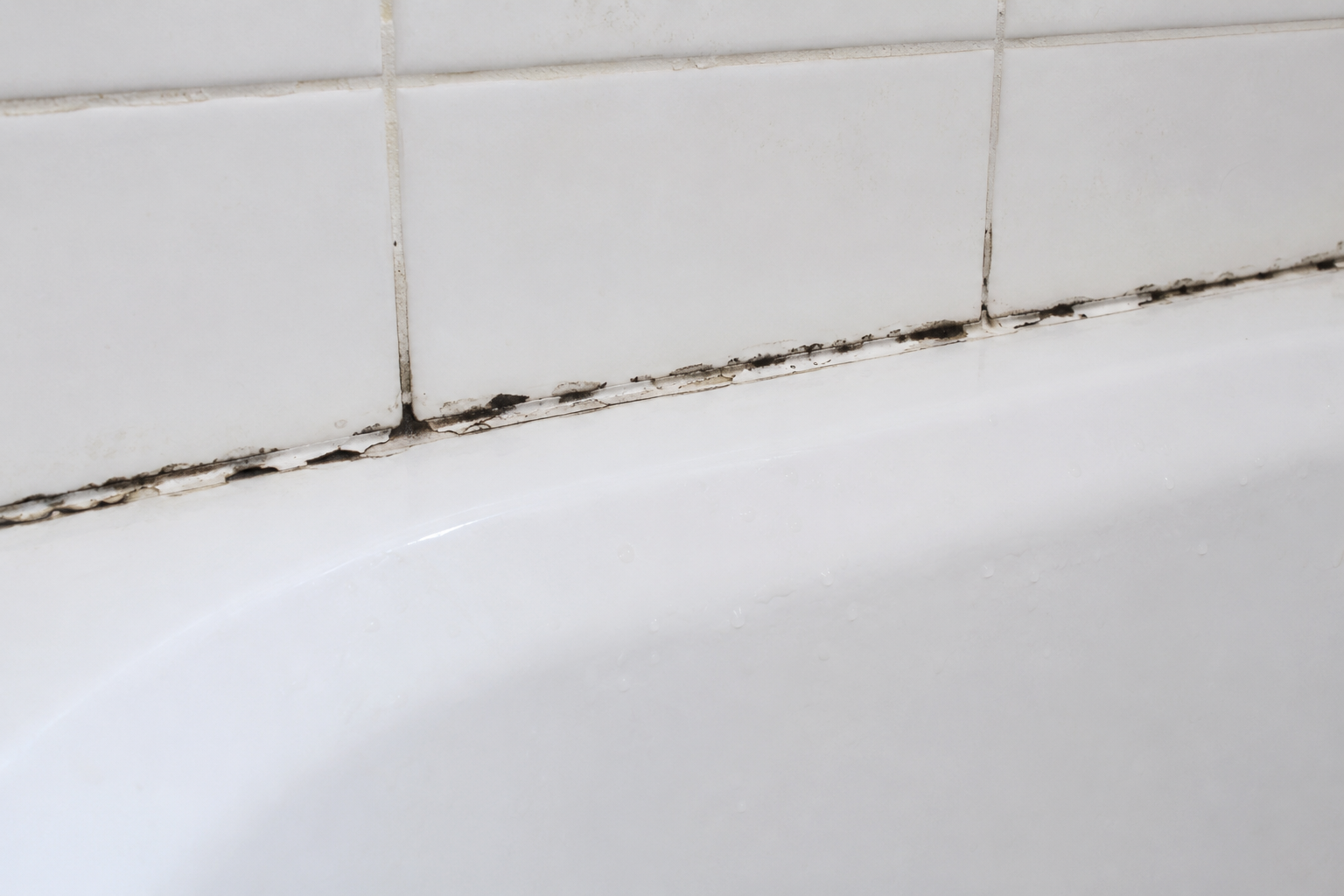
Let me be upfront about something: Scrubsquad is an eco-friendly cleaning company. We care about what we use, what we breathe, and what goes down your drain. We use ECOS Pro products for most of what we do. We make some of our own cleaners from ingredients we trust. We genuinely try to minimize harsh chemicals in the homes we work in, and we think that matters.
So this is not the post I was hoping to write.
Because after trying everything I could reasonably get my hands on, I keep coming back to the same conclusion: for the visible black and pink staining that mold and bacteria leave on bathroom caulk, nothing I've tested has worked as consistently or as clearly as plain chlorine bleach. Not the "natural" mold removers. Not the commercial mold-stain products. Not the topical hydrogen peroxide from the drugstore. Bleach.
I'm not happy about it. I'm also not going to tell you something different just because it sounds better.
Before I get to my own results, though, I went down a pretty deep rabbit hole on what bleach actually does, what mold actually is, and whether the internet's take on all of this is accurate. Some of what I found surprised me. Some of it confirmed what I suspected. And a couple of things I thought I understood turned out to be more complicated.
So let's go through it.
First, what are we actually talking about?
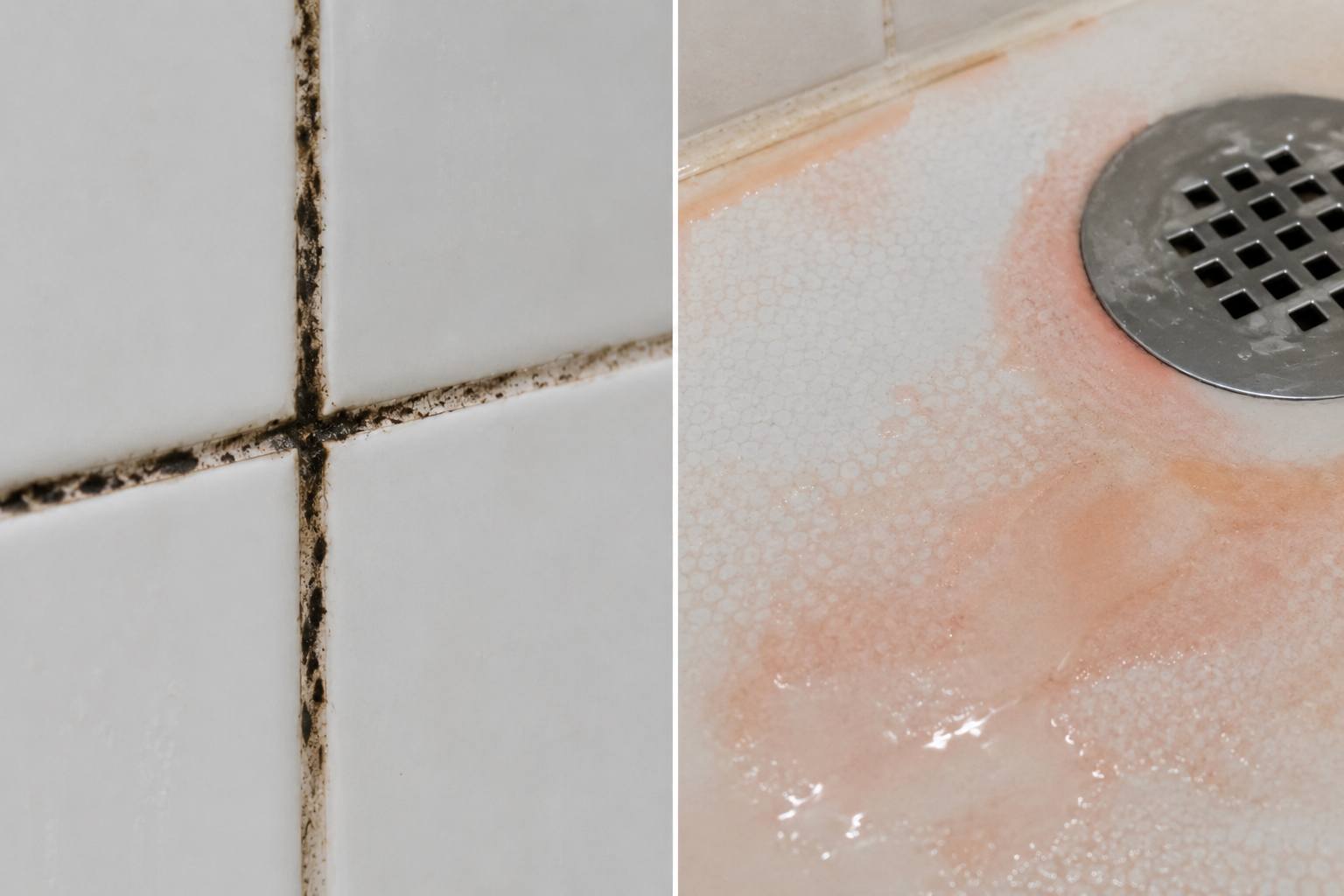
When someone calls and says "there's black mold in my shower," they could mean several different things, and not all of them are actually mold.
Here's what I've found tends to be lurking in bathroom surfaces:
The black stuff is usually a dark-pigmented fungus — most commonly Cladosporium, Aspergillus, or Alternaria — all of which can appear dark green, brown, or black depending on the surface and the light. The infamous "toxic black mold" (Stachybotrys chartarum) gets a lot of headlines, but it's actually less common on tile and grout directly — it needs sustained moisture in cellulose materials like drywall or wood to really take hold. The stuff on your shower caulk is almost certainly something more common, and while that's genuinely less alarming, the CDC is clear that you don't need to identify the species before cleaning it — if mold is growing, clean it and fix the moisture problem.
The pink stuff is not mold at all. It's a bacterium called Serratia marcescens — an airborne organism that produces a pink-to-reddish biofilm wherever it finds soap residue, body oils, and moisture. It's not a water-quality issue; it travels through the air, which is why it keeps coming back even after you clean it. It's manageable but, in my experience, never fully eliminated.
The reason this distinction matters: black fungal staining and pink bacterial biofilm are biologically different problems, and the same cleaner doesn't necessarily knock both out the same way. As it turns out, bleach handles both — for reasons I'll get to.
Killing, removing, and staining — three different things
Before we go further, here's a distinction that the EPA makes and that I think is genuinely important:
Killing the organism means inactivating or destroying the living cells. Removing the mold means physically getting the contamination off the surface. Removing the staining means getting rid of the visible discoloration left behind.
These are not the same thing. The EPA explicitly notes that dead mold can still cause allergic reactions — so simply killing it isn't enough. You need to actually clean the surface too. And as a cleaning company, I'd add a third layer: a resident's perception of "clean" is largely visual. A bathroom where the mold is dead but the black staining remains doesn't feel clean. That's not vanity — restoring a surface's appearance is part of what cleaning means.
So when we ask "does bleach work on mold," the real question is: does it do all three things? Kill the organism, remove the contamination, and clear the staining?
On the right surfaces: yes. And the science explains why.
What bleach actually does
Household chlorine bleach is sodium hypochlorite dissolved in water — typically 3–8% concentration. It's a powerful oxidizer, meaning it chemically attacks and breaks down biological material by stripping electrons from organic compounds. That's the mechanism behind both its disinfecting action and its stain-removing action.
On the organism itself: A peer-reviewed study published in the Journal of Allergy and Clinical Immunology tested 2.4% sodium hypochlorite against common indoor mold contaminants — including Penicillium, Cladosporium, Stachybotrys, Alternaria, and Aspergillus — dried on ceramic surfaces. It performed well on non-porous surfaces, and a University of Arizona study published in the Journal of Occupational and Environmental Hygiene found that Aspergillus fumigatus allergen levels were reduced by an average of 95.8% within 30 seconds of bleach treatment.
On the black staining specifically: This is the part I found genuinely interesting to research. The black color in fungal mold comes from melanin — a pigment embedded in the fungal cell wall that protects the organism from environmental stress. A 1996 study published in Infection and Immunity (American Society for Microbiology) found that incubation of melanized fungal cells in a 0.1–0.5% sodium hypochlorite solution caused rapid bleaching within 10 minutes — cells went from black to white, with spectroscopic studies confirming the melanin had been chemically destroyed. A 2026 review in World Journal of Microbiology and Biotechnology (Springer) confirms the mechanism: sodium hypochlorite decolorizes melanin through oxidative ring opening and fragmentation of its aromatic structure.
In plain English: bleach doesn't just kill the mold. It chemically destroys the pigment that makes it visible. That's why it works so dramatically on a surface — it's doing two jobs at the same time.
For Serratia marcescens — the pink stuff — sodium hypochlorite breaks down the bacterial cell walls, disrupts essential proteins and enzymes, and damages DNA to prevent replication. Bleach handles that too.
The limitation nobody talks about clearly enough
Here's where the EPA's position and real-world cleaning experience meet, and I want to be honest about what the research actually says.
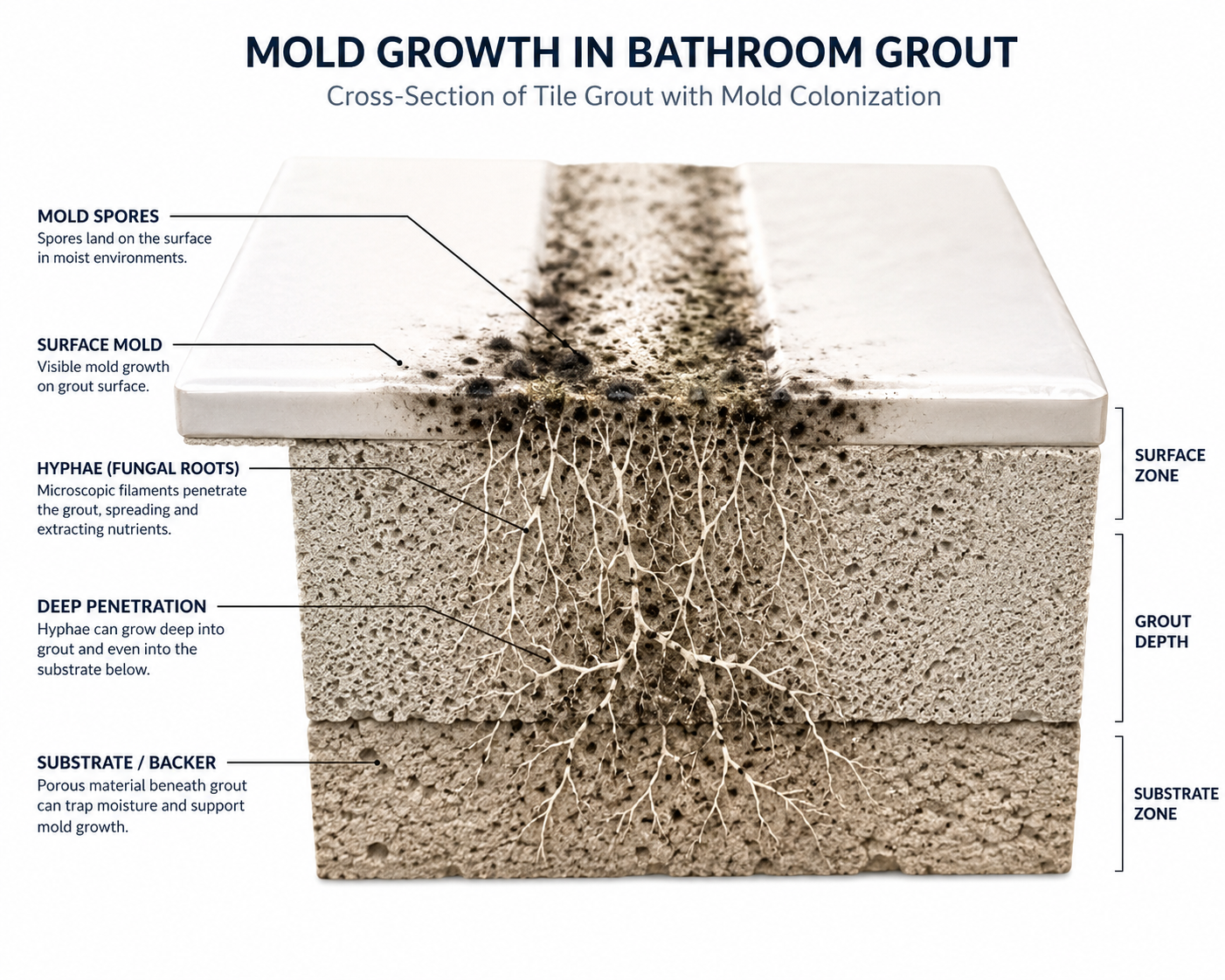
Bleach works on non-porous surfaces — glazed tile, glass, sealed chrome, porcelain. On those surfaces, the hypochlorite ion contacts the organism directly, destroys the melanin, and the results are visible and lasting (until the moisture brings it back).
On porous surfaces — grout, caulk, drywall, wood — it's more complicated. The hypochlorite ion is large; it reacts at the surface and is consumed before it can travel into the material. Meanwhile, the water carrier in the bleach solution is small and soaks right in. So on a genuinely porous surface, the chlorine kills what it touches on the surface while the water feeds the root structure (hyphae) deeper inside. The staining fades, you think it worked, and the mold regrows from beneath in a week or two.
This is why the EPA doesn't recommend bleach as a routine mold cleanup approach, and also why the CDC still provides bleach as an option for hard surface cleaning. They're not contradicting each other — they're addressing different scenarios. The EPA's guidance is primarily about remediation of larger infestations on building materials. For what we actually do in a bathroom — glazed tile, clean porcelain, the face of a fixture — the CDC's position is the applicable one.
Caulk sits somewhere in the middle. It's semi-porous — not as deep-penetrating as drywall, but not as sealed as glazed tile. In my experience, bleach does clear the staining from cured caulk, but mold tends to come back faster there than on the surrounding tile. The honest answer for heavily stained or cracked caulk is usually to replace it rather than keep cleaning it — because at that point the mold is rooted inside the bead, and no topical treatment is going to fix that permanently.
What I actually tested
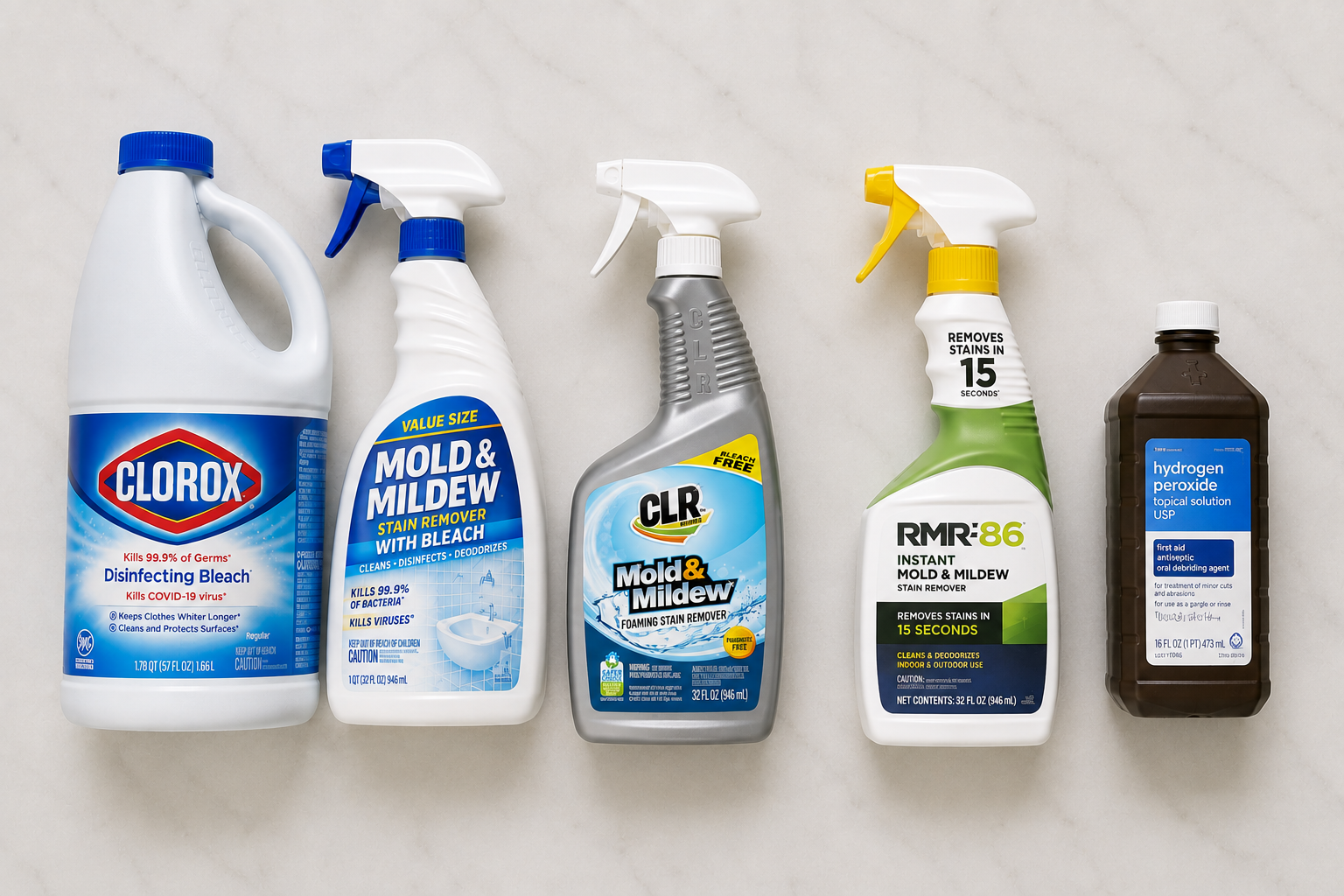
I want to be direct about this, because it's the part of the post that matters most to me.
I ran side-by-side comparisons on bathroom cured caulk with genuine mold and bacteria staining. Here's what I tested:
- Standard household chlorine bleach
- Bathroom-specific bleach products formulated for mold removal
- CLR Mildew Remover
- RMR-86 Mold Stain Remover
- Store-bought topical hydrogen peroxide (3%)
The result was not close. Bleach — both standard and bathroom-specific — was the only product to consistently and clearly remove the staining. CLR Mildew Remover and RMR-86 showed no visible stain removal on the caulk surfaces I tested, and I don't think that's a minor quibble given that both products market themselves specifically for this problem. My best guess on RMR-86 in particular: concentration. It doesn't smell like bleach the way a household bottle does, and the melanin research I cited above makes it clear that oxidative punch matters — higher concentration gets to the pigment faster and more completely. Whatever sodium hypochlorite is in that bottle, at whatever level they're using, it didn't do the job in my testing. CLR Mildew Remover I suspect is formulated more for light surface mildew than for staining that's worked its way into caulk.
As for the 3% hydrogen peroxide — I want to be careful here. The chemistry says hydrogen peroxide should also decolorize melanin through the same oxidative pathway as bleach, and laboratory studies have tested concentrations of 30% with positive results. But 30% hydrogen peroxide is not something you pick up at the drugstore, and frankly I haven't been able to find a supplier for it to even test it properly. At the 3% concentration that's readily available, it didn't produce visible results on my test surfaces. I'm not ruling it out at higher concentrations — but I can't test what I can't source, and I won't recommend something I haven't tried. If that changes, I'll update this.
About the eco-friendly angle — because it's worth addressing directly
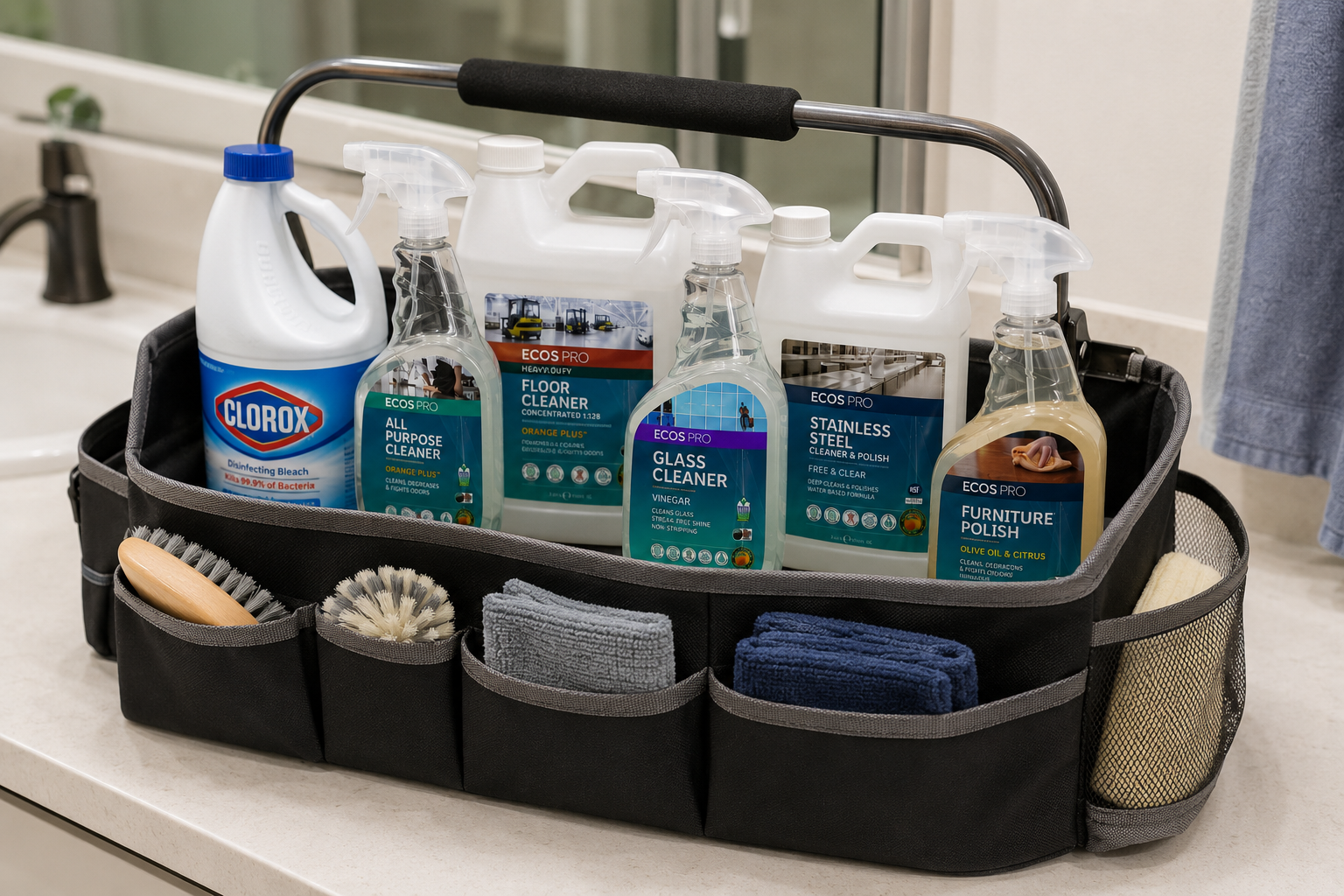
We are, genuinely, an eco-friendly cleaning company. We use ECOS Pro. I make my own castile soap. We care about what goes into your home and what comes back out of it.
Chlorine bleach is not in that category. It's corrosive, it generates chlorine fumes in an enclosed space, it degrades rubber seals over time, and — as we covered in our post on DIY cleaners — it should never, ever be mixed with vinegar or anything except water.
The reason we're willing to use it in specific situations isn't that we've stopped caring. It's that I haven't found anything that actually works as well on mold staining where it matters most — and recommending something ineffective just because it sounds more natural isn't doing right by you. We use bleach carefully, with the windows open, diluted appropriately, and only when the job genuinely calls for it. We're always looking for something that gets the same results without the tradeoffs, and if we find it, we'll write about it here.
What about UV light?
Short version: interesting in theory, not practical for bathroom surface mold.
UV-C radiation does kill microorganisms by disrupting their DNA, and it's genuinely used in hospitals and on HVAC components where sustained exposure to a fixed surface is possible. But the EPA is clear that typical residential UV devices have limited effectiveness against mold and bacterial spores — effective destruction usually requires much higher UV exposure than a home unit provides. UV also doesn't reach anything it can't see directly — mold inside grout, behind caulk, or in any shadow is completely untouched.
There's also a materials concern: UV-C damages plastics, certain finishes, and caulk with prolonged exposure. In an already-compromised bathroom surface, that's a tradeoff I'm not eager to make.
I'm leaving this one as "doesn't solve the problem as I understand it right now," and as always — if something changes that answer, I'll say so.
The part bleach cannot fix
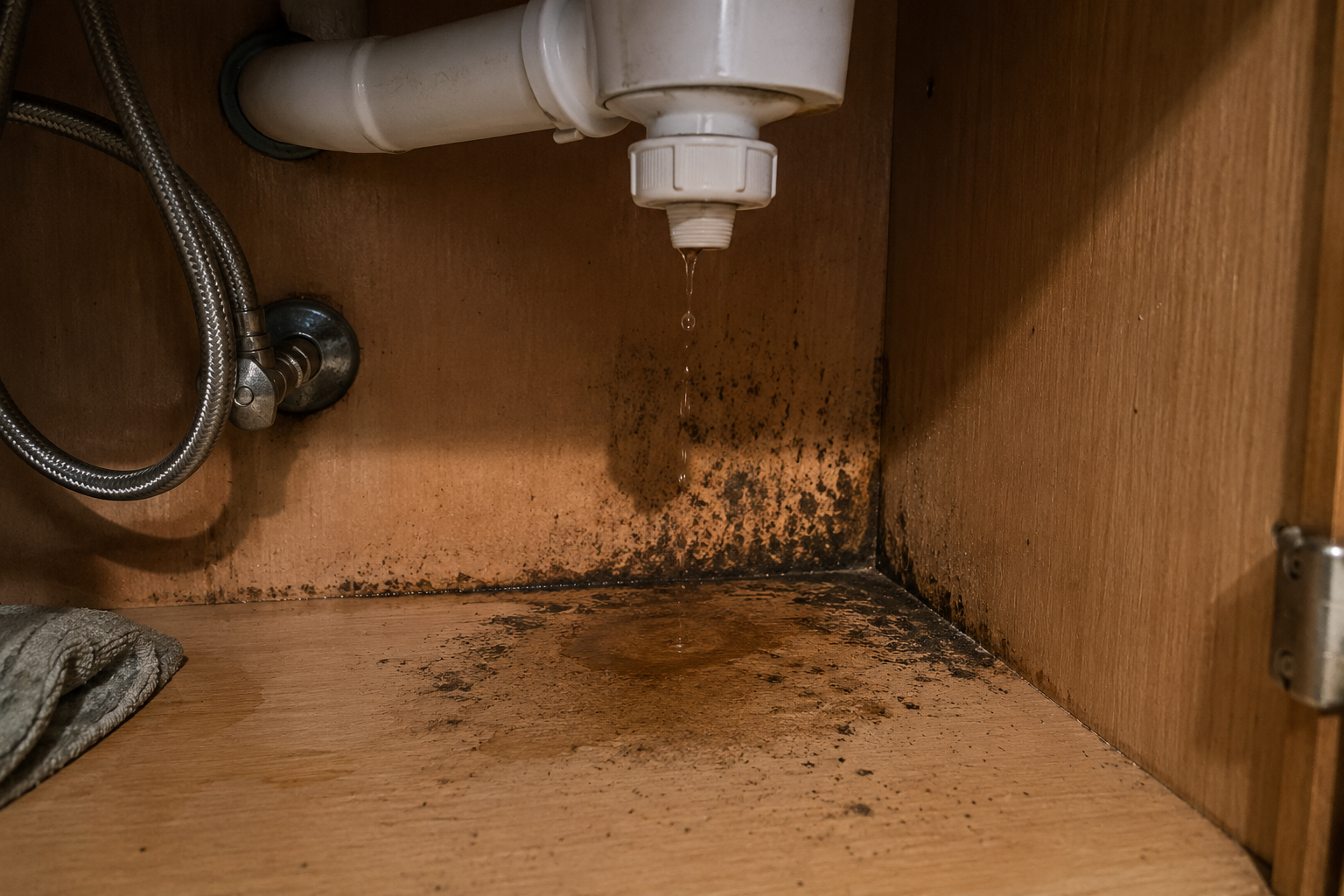
Bleach can make a bathroom look fantastic. But it cannot:
- Fix a slow-dripping pipe
- Repair inadequate bathroom ventilation
- Stop condensation on cold surfaces
- Correct a failing caulk seal that's letting moisture into the wall
- Address mold that has grown behind the tile into the substrate
The CDC recommends fixing leaks and ensuring bathroom exhaust fans vent to the outside — and specifically states that mold cleanup requires both treating the growth and correcting the moisture problem. If you only do one, you'll be cleaning the same spot forever. I've seen this. The bathroom looks great when we leave, and three months later the same call comes in because the mold is back. It's back because whatever is keeping that surface wet was never addressed.
If mold keeps returning to the same place, please don't just keep treating it. Ask why. The answer is almost always moisture, and getting ahead of it matters a lot more than the cleaning does.
The insurance part — and why this matters more than people think
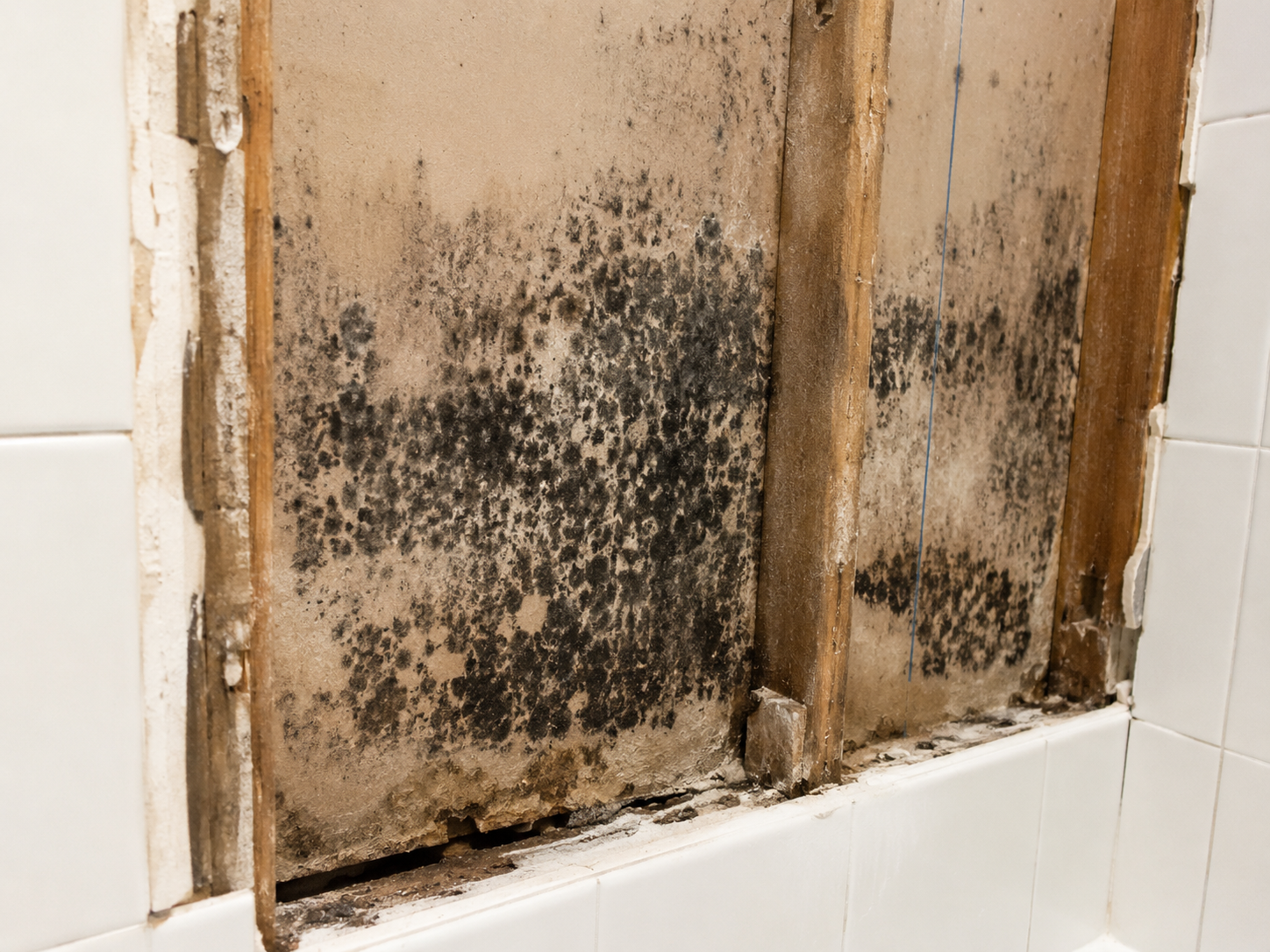
Here's something that doesn't come up in cleaning blogs but probably should.
In Washington State — and King County in particular — water damage is one of the most common reasons people file homeowners insurance claims.
The short version: standard homeowners insurance covers sudden and accidental water damage — a pipe that bursts, an appliance that fails without warning. According to the Washington State Office of the Insurance Commissioner, gradual leaks, slow seepage, and mold caused by long-term neglect are generally excluded. Insurers treat these as maintenance issues — problems you should have caught and fixed before they became expensive. Most policies do not cover mold damage unless the mold results directly from a covered sudden event, like a burst pipe; damage from long-term leaks, humidity, or poor ventilation is generally excluded.
The team at Repair Point LLC, a restoration contractor right here in the Seattle area, puts it plainly: gradual damage is the number-one reason insurance claims are denied in Washington — a pipe that has been slow-dripping for six months and caused rot will be labeled "maintenance neglect" by an adjuster. They recommend inspecting under sinks and behind toilets monthly, and note that catching it early is the only reliable way to ensure coverage.
Mold growing on your shower caulk is a cleaning problem. Mold growing because a slow leak behind your wall has been going on for months is potentially a very expensive problem that your insurance may not cover. We can clean what we can see. We can't see behind the wall, and we'd rather tell you that honestly than have you find out the hard way later.
When bleach is not the right call
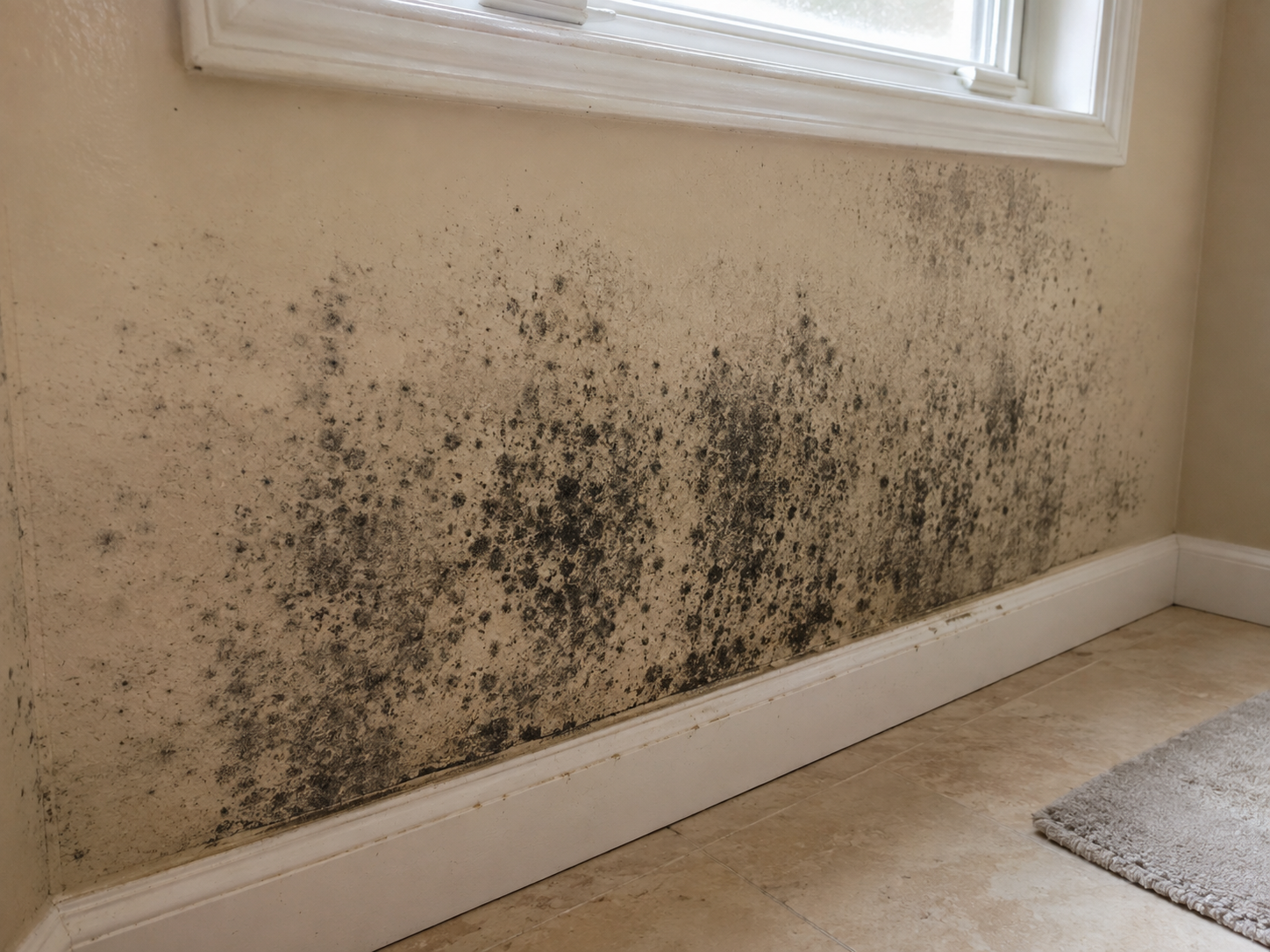
We've been talking about bathroom tile, grout, and caulk — surfaces where mold is accessible and the area is manageable for a cleaning professional to address.
Bleach is not the answer — and we are not the right call — for:
- Mold covering more than 10 square feet (EPA guidance recommends professional assessment at this threshold)
- Mold inside walls, in insulation, or in structural materials
- Mold on drywall, carpet, or wood where the organism has penetrated the material
- Any situation where a musty smell persists after visible mold has been cleaned — that often means there's more you can't see
- Recurring mold in the same location despite repeated cleaning
In those situations, what's needed isn't a cleaning company. It's a mold remediation specialist, and possibly a contractor to address the underlying cause. Knowing when to say "this is beyond what we do" is part of doing our job responsibly.
What I learned writing this
A few things I didn't fully understand going in:
- Killing mold and removing mold are not the same thing. The EPA is right about that, and it's worth understanding.
- The black coloration is melanin — a deliberate protective pigment — and bleach destroys it chemically at the same time it kills the organism. That's why it looks so dramatic, and that's also why lower-concentration products claiming to do the same thing often don't.
- The pink stuff isn't mold. It's a bacterium called Serratia marcescens, and bleach handles it well — but it will always come back as long as the moisture and soap residue are there.
- Higher-concentration hydrogen peroxide may well do what the 3% drugstore version couldn't — but 30% isn't something I can readily source, so I can't test it yet, and I won't recommend what I haven't tried.
- UV is genuinely interesting and genuinely not practical for what we do.
- The moisture problem is always the real problem.
And the conclusion I didn't want to arrive at but arrived at anyway: for the specific job of removing visible mold and bacteria staining from bathroom caulk on non-porous and semi-porous surfaces, in my hands, on my test surfaces, bleach works and the alternatives I tried did not. That's the honest answer as of right now. If something changes that, I'll tell you.
Keeping mold from coming back
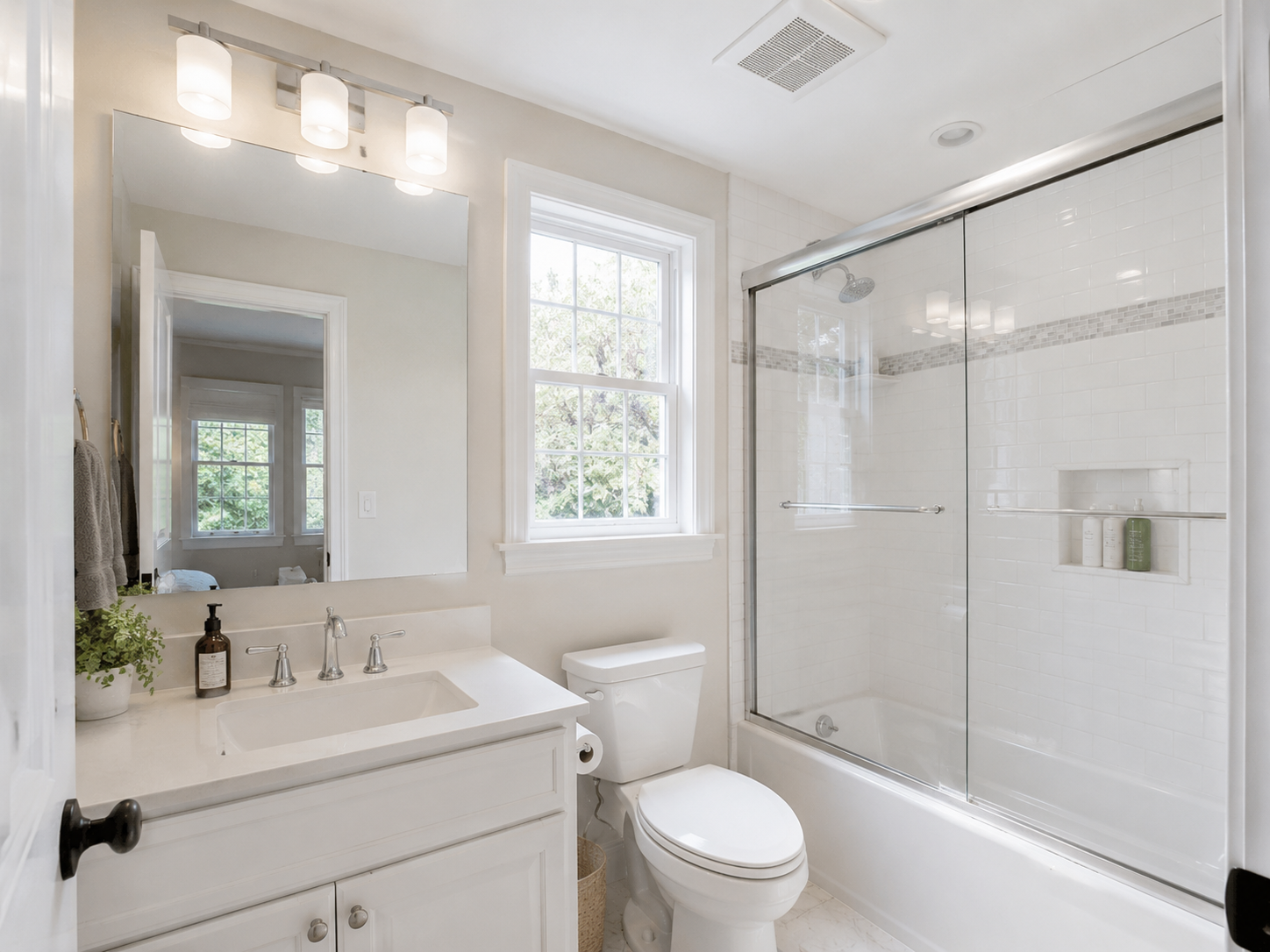
If you want to spend less time dealing with mold, the fixes are almost always boring and almost always work:
- Run the exhaust fan. Run it during every shower and for at least 20–30 minutes after. Make sure it actually vents outside and not just into the attic.
- Dry the surfaces. A quick squeegee or wipe-down after a shower removes the moisture mold needs to get established within 24–48 hours.
- Watch the caulk. Cracked, peeling, or discolored caulk is an entry point for moisture. Replace it before it becomes a wall problem.
- Fix leaks promptly. A slow drip under a sink looks minor until it isn't — and in Washington, that drip is also the kind of thing your insurance company may not cover once it becomes a real problem.
- If it keeps coming back in the same spot, please ask why. We mean that genuinely. Cleaning is not a substitute for fixing the cause, and we'd much rather you find the cause than call us every three months for the same bathroom.
So, does bleach really kill mold?
Yes. On non-porous and semi-porous hard surfaces, at household concentration, bleach kills the organism and chemically destroys the melanin pigment responsible for the visible staining — two jobs, one product. The science supports it, my own testing supports it, and the CDC lists it as an appropriate method for hard-surface mold cleanup.
Its limitations are real: it doesn't penetrate porous materials effectively, it doesn't solve moisture problems, it's not appropriate for large infestations or structural mold, and it needs to be handled with care — ventilation, appropriate dilution, and never mixed with other chemicals.
We use it carefully, specifically, and only when nothing else gets the job done. As a company that genuinely prefers not to use harsh chemicals, that's not a conclusion I arrived at casually. It's where the testing led.
If you've found something that works as well or better on caulk staining and want to tell me about it, I'm genuinely listening. I read everything.
Sources used in this post:
- CDC, Mold Health — About Mold
- CDC, How to Safely Clean and Sanitize with Bleach
- EPA, Should I Use Bleach to Clean Up Mold?
- EPA, Guide to Air Cleaners in the Home — UVGI
- EPA, Mold Remediation in Schools and Commercial Buildings — Chapter 3
- Casadevall et al., "Melanization of Cryptococcus neoformans," Infection and Immunity, 1996 (ASM)
- Reynolds et al., "Household Mold and Efficacy of Sodium Hypochlorite," Journal of Occupational and Environmental Hygiene, 2012
- Journal of Allergy and Clinical Immunology, 2005 — sodium hypochlorite against indoor mold
- Journal of Fungi, 2023 — fungal melanin review
- World Journal of Microbiology and Biotechnology, 2026 — melanin degradation
- Washington State Office of the Insurance Commissioner — Leaks, Water Damage and Mold
- Repair Point LLC — Top 10 Reasons Claims Are Denied in Washington